We provide garden bed care throughout the BB5 and BB6 postcode districts of Accrington, from Church to Oswaldtwistle, and in nearby Haslingden, Padiham and Rawtenstall. We visit, measure and talk through the options with you first, then send a written, itemised quote for your Accrington garden.
Accrington Landscaping & Driveways looks after garden beds and borders for homeowners across Accrington. Garden bed care covers the three jobs that keep a planted bed healthy year after year: weeding, replenishing mulch and improving the soil underneath. It suits anyone with established borders, raised beds or a newly planted scheme that needs regular attention but not a full redesign.
Most beds in Accrington were planted with good intentions and then left to fend for themselves. Within a couple of seasons the bindweed arrives, the bark mulch thins to nothing and the soil compacts into something closer to a footpath than a growing medium. Our team puts that right on a schedule that fits the garden, visiting in spring and autumn as a minimum, with extra visits through the growing season where the weed pressure is high.
We work with hand tools and a border fork rather than rotavators, because churning an established bed damages roots and brings buried weed seed to the surface. Every visit ends with the bed edged and the debris removed under our waste carrier registration. If a bed needs more than care, our Flowering Plant Care and Ornamental Plant Health services pick up where this one stops.
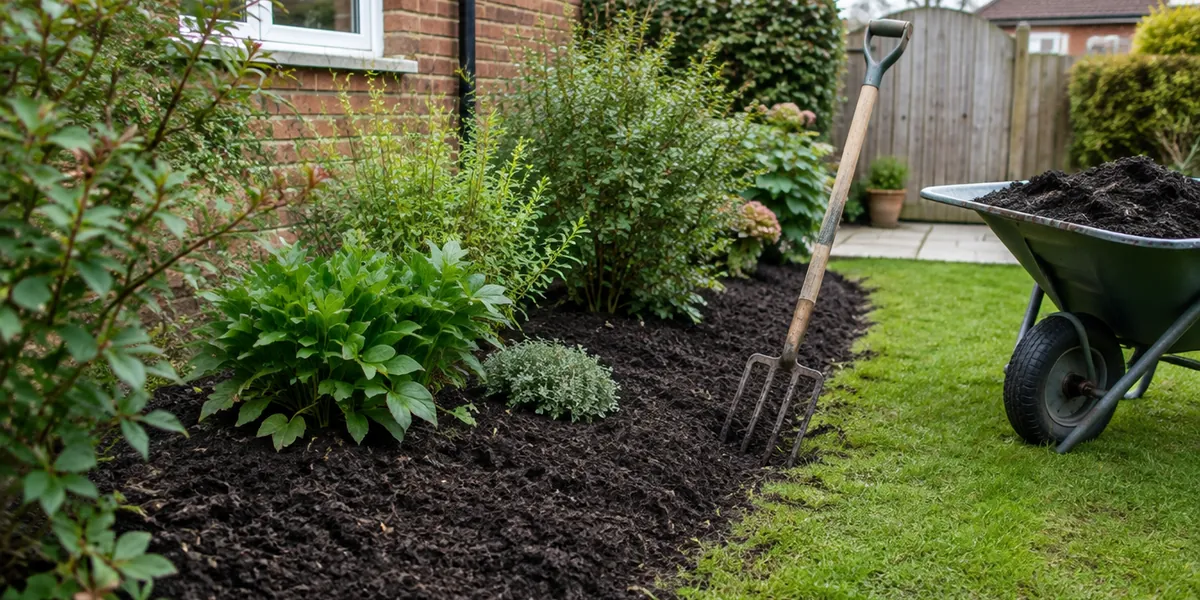
Where We Offer Garden Bed Weeding
Weeding is the job that decides whether a border looks cared for or abandoned. We hand-weed beds in Accrington rather than spraying as a first resort, because most of the weeds that trouble ornamental borders are perennials with deep roots that a hoe simply tops off. Bindweed, couch grass, ground elder and creeping buttercup all regrow from fragments, so we lift them with a hand fork and trace the root as far as it goes.
Annual weeds such as hairy bittercress, chickweed and groundsel are a different problem. They germinate in flushes from March onwards and set seed within weeks, so the aim is to clear them before they flower. A sharp Dutch hoe on a dry day deals with these in open soil; in tightly planted beds we work by hand so nothing you want is disturbed.
Timing matters. A thorough weed in early spring, before the perennials bulk up and hide the ground, saves hours later in the year. A second pass in early summer catches the annuals, and an autumn tidy removes anything that would overwinter. Where a bed has a serious infestation of ground elder or horsetail, we will tell you honestly that it may take two or three seasons of persistence.
Everything we pull is bagged and taken off site. Perennial weed roots never go on a compost heap, and if we come across Japanese knotweed we stop, photograph it and talk to you about a specialist treatment plan.
Mulch Replenishment
A mulch layer does several jobs at once. It shades out germinating weed seed, holds moisture through dry spells, protects roots from frost and feeds the bed as it breaks down. The problem is that it keeps breaking down, so a layer that was 75 mm deep when it went on can be a thin crust within eighteen months. Replenishment tops it back up to a depth that works.
We offer several materials for beds in Accrington, and the right one depends on the planting. Composted bark is the standard choice for mixed borders: it looks tidy, lasts two to three years and does not rob nitrogen from the soil the way fresh woodchip does. Well-rotted garden compost or farmyard manure suits hungry plants such as roses, dahlias and vegetable beds. Gravel or slate chippings are better for Mediterranean planting and anything that hates winter wet.
The job starts with a full weed and a light fork over so the new mulch sits on open soil rather than a compacted pan. We water the bed first if the ground is dry, because mulch applied to dry soil keeps rain out as effectively as it keeps moisture in. The material then goes on at 50 to 75 mm, kept clear of plant stems to avoid rot.
Autumn and early spring are the best windows, when the soil is moist and the plants are dormant or just waking. We supply loose loads or bagged material depending on access, and we calculate the cubic metres a bed needs rather than guessing.
Soil Improvement
Many gardens sit on soil that was compacted during house building and never properly recovered. Heavy clay that cracks in July and puddles in January, or thin topsoil over builder's rubble, will hold a border back no matter how much you spend on plants. Soil improvement is the slow, unglamorous work that makes everything else possible.
We begin by looking at what is actually there. A few test holes with a spade tell us the topsoil depth, the texture, how it drains and whether there is a hard pan beneath. A simple pH test kit shows whether the bed leans acid or alkaline, which decides what we add and which plants will thrive. We do not guess at this; a bed that has sulked for years often has one clear cause.
For clay, the answer is organic matter in quantity, worked into the top 200 to 300 mm with a fork rather than dug in deeply. Well-rotted manure, mushroom compost or green waste compost all open up the structure and feed the soil life that keeps it open. Horticultural grit helps on the worst sites. On sandy or thin soils the same organic matter holds water and nutrients that would otherwise wash straight through.
Where a bed has been under paving or turf for years, we break the pan with a fork at 300 mm centres first. Results build over seasons rather than weeks, so we reassess each autumn. Expect better drainage, easier weeding and plants that need far less watering during a hosepipe ban.
Why Choose Us for Garden Bed Care in Accrington
Plenty of firms will run a strimmer round a border and call it maintenance. Our team treats bed care as horticulture. The people who visit your garden in Accrington know the difference between a self-sown foxglove worth keeping and a weed worth pulling.
We work to a written schedule agreed with you at the start, so you know which months we visit and what each visit covers. Materials are priced and listed on the quote. Green waste leaves with us under our registered waste carrier licence rather than sitting in bags by the gate. Our work carries a written guarantee, and if a bed we have mulched or improved does not perform as we said it would, we come back and look at why.
Because we are based in Accrington rather than travelling in from another county, we can fit in short visits at the right moment, which with weeding and mulching is most of the battle.
Our Garden Bed Care Process
- Site visit and bed survey: we walk the garden with you, note each bed's planting, soil and weed problems, and dig a couple of test holes.
- Written plan and quote: you receive a schedule of visits, the materials proposed for each bed and a fixed price for the first season.
- Initial clear-out: the first visit is the heaviest, lifting perennial weeds by the root, cutting back dead growth and re-cutting the lawn edges.
- Soil work: organic matter and grit are forked into open areas, and any hard pan is broken with a fork.
- Mulching: the bed is watered if dry and dressed with the agreed mulch at 50 to 75 mm, kept clear of stems.
- Follow-up visits: shorter calls through the season to hoe annual weeds, top up thin patches and check how plants are responding.
- Autumn review: we assess what worked, adjust the plan and agree the following year's schedule.
Each visit in Accrington ends with the paths swept, the debris removed and a brief note of anything we noticed.
How Garden Bed Care Is Priced in Accrington
The biggest single factor is the state of the beds when we start. A border that has had a year of neglect takes several times longer to clear than one that has been kept on top of, and a ground elder or bindweed problem adds repeat visits. Bed area and the density of planting come next, since hand-weeding between closely spaced perennials is slow work.
Materials vary too. Composted bark, mushroom compost and slate chippings sit at different price points, and the volume needed depends on area and depth. Access matters in Accrington: a front garden where a loose load can be tipped on the drive is quicker to service than a rear garden reached through the house or down a narrow side passage, where everything moves by barrow.
Finally, visit frequency shapes the annual figure. Two heavy visits a year cost less than monthly calls, but monthly calls keep the beds looking better. We set this out on a written quote so you can choose.
Garden Bed Care Around Accrington
We look after beds and borders throughout Accrington. If you have a long rear garden in Oswaldtwistle with deep mixed borders, two solid clearances a year keep it in hand. In Church and Clayton-le-Moors, if your front garden is compact, mulching and tidy edges make the whole street-facing side of the house look sharper. If your home in Great Harwood is on a newer estate, compacted builder's soil may need serious improvement work before plants will settle. In Huncoat, if your garden is mature, it may come with mature weed problems, and we schedule accordingly. We also cover nearby Haslingden, Padiham and Rawtenstall by arrangement.
People in Accrington often ask us about garden maintenance and flowering plant care at the same time.
Common Questions
How often should garden beds be weeded in Accrington?
For most borders, a thorough weed in early spring and another in autumn, with lighter passes every four to six weeks through the growing season, keeps annual weeds from seeding and perennials from re-establishing. Beds with bindweed, ground elder or couch grass need more frequent attention in the first year or two until the root systems are exhausted.
What mulch do you recommend for a mixed border?
Composted bark is our usual choice for mixed ornamental borders because it looks neat, suppresses weeds well and lasts two to three years. For roses, dahlias and other hungry plants we prefer well-rotted manure or garden compost. Gravel suits dry, sunny beds with Mediterranean planting. We apply all of them at 50 to 75 mm depth onto moist, weeded soil.
Can you improve heavy clay soil in an existing bed without replanting?
Yes. We fork organic matter and horticultural grit into the top 200 to 300 mm between the plants rather than digging the whole bed over, which would damage roots. It is slower than starting from scratch but it works. Improvement builds over two or three seasons, and we often combine it with an annual mulch of compost so the soil keeps getting fed.
Do you use weedkiller on garden beds?
Hand weeding is our default in planted beds because it is safer for the plants and more effective on deep-rooted perennials. Where a bed is being cleared completely before replanting, a targeted treatment can save weeks of work, and we discuss that with you first. We never treat Japanese knotweed ourselves; that needs a specialist programme and we will point you to one.
What happens to the green waste you remove?
All weeds, prunings and old mulch leave the site with us at the end of each visit. We are registered waste carriers, so the material goes to a licensed green waste facility rather than into a skip or onto a verge. Perennial weed roots are never composted on site, because fragments of bindweed or couch grass regrow from a compost heap.